
Canada’s Financial Storm 2026
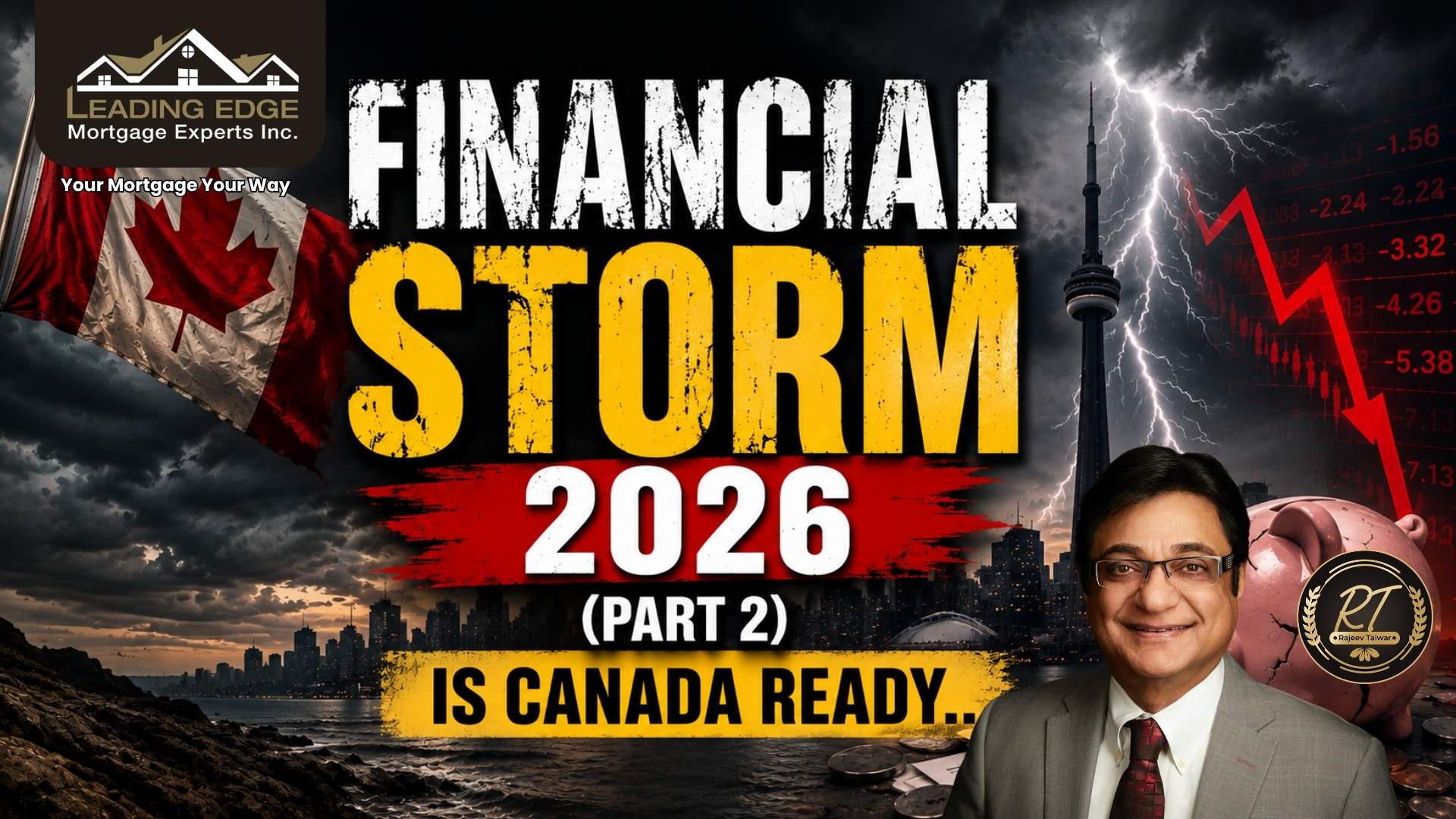
Canada’s Financial Storm 2026
Canada’s financial environment in 2026 presents households with a unique combination of opportunities and challenges. Interest rates have fallen significantly from their previous highs, but inflation, household debt, housing costs, economic uncertainty, and changing global conditions continue to influence Canadians’ financial decisions.
The Bank of Canada has maintained its policy interest rate at 2.25% as of September 2, 2026. At the same time, the Bank continues to monitor inflation, economic growth, trade uncertainty, and geopolitical developments.
This does not necessarily mean Canada is heading toward a financial crisis. However, it does highlight the importance of being financially prepared.
For homeowners and prospective buyers, preparation means understanding your mortgage, managing debt responsibly, maintaining financial flexibility, and making decisions based on long-term goals rather than short-term economic headlines.
At Leading Edge Mortgage Experts Inc., we believe the best time to review your financial strategy is before circumstances force you to make difficult decisions.
Why 2026 Requires Careful Financial Planning
Economic conditions can change quickly.
Interest rates may move, inflation can affect household expenses, employment conditions can shift, and international developments can influence Canada’s economy.
The Bank of Canada’s 2026 consumer survey found that Canadians continued to have concerns about high prices and economic uncertainty, while perceptions of the labour market remained relatively soft.
For households, these uncertainties can make financial planning more challenging.
A mortgage payment that feels manageable today may become more difficult if other household expenses increase. Similarly, a household carrying significant consumer debt may have less flexibility if income changes unexpectedly.
This is why financial preparedness matters.
Canadian Household Debt Remains a Major Consideration
Household debt is one of the most important issues Canadians need to consider.
Statistics Canada reported that household credit-market debt reached approximately $3.25 trillion in the first quarter of 2026. The household credit-market-debt-to-disposable-income ratio increased to 179.6%, meaning households had roughly $1.80 of credit-market debt for every dollar of disposable income. The household debt-service ratio also increased to 14.75%.
These figures do not mean every Canadian household is financially vulnerable. Household financial situations vary considerably.
However, high levels of debt can reduce financial flexibility, particularly when combined with rising living costs or changes in employment.
For this reason, Canadians should understand not only how much debt they have, but also how that debt fits into their overall financial plan.
Mortgage Renewals Deserve More Attention
For many Canadian homeowners, mortgage renewal may be one of the most important financial decisions of 2026 and the years ahead.
When a mortgage comes up for renewal, accepting the lender’s offer without reviewing alternatives may not always be the best approach.
Your financial circumstances may have changed since you originally obtained the mortgage.
Your income may be higher or lower. You may have paid down other debts. Your home’s value may have changed. You may have new investment plans or different family responsibilities.
A renewal is therefore an opportunity to reassess your mortgage strategy.
Before renewing, consider whether your current mortgage still provides the right combination of rate, flexibility, payment structure, and long-term suitability.
Don’t Build Your Budget Around the Best-Case Scenario
One of the biggest financial mistakes Canadians can make is planning around ideal circumstances.
If interest rates are lower, it can be tempting to assume they will remain low indefinitely. If income is increasing, it can be tempting to increase spending accordingly.
However, responsible financial planning should also consider less favourable scenarios.
Planning for different possibilities can provide greater financial confidence.
The Importance of Financial Flexibility
Financial flexibility can be one of your strongest defences during uncertain economic conditions.
A household with manageable monthly obligations and accessible savings may have more options when circumstances change.
Financial flexibility can allow you to handle unexpected repairs, employment changes, family expenses, or investment opportunities without immediately relying on expensive credit.
This is why borrowing the maximum amount available is not always the best financial decision.
A mortgage should fit comfortably within your overall financial plan rather than consume every available dollar.
Should You Refinance or Consolidate Debt?
For some homeowners, refinancing may be worth considering.
Homeowners with significant equity may potentially use refinancing to restructure existing debt, fund renovations, consolidate certain high-interest debts, or pursue other financial objectives.
However, refinancing should be approached carefully.
Converting high-interest debt into mortgage debt may reduce the immediate cost of borrowing, but it does not eliminate the debt itself.
Homeowners should consider the refinancing costs, new payment structure, total interest, and repayment strategy before proceeding.
The objective should be to improve your financial position, not simply move debt from one account to another.
Your Home Equity Can Be a Financial Tool
For many Canadians, their home represents a significant portion of their overall wealth.
As homeowners pay down their mortgage and build equity, that equity may become an important financial resource.
Depending on individual circumstances and lending eligibility, home equity may potentially be used for renovations, investment opportunities, debt restructuring, education, business purposes, or other major expenses.
However, equity should not be viewed as unlimited spending power.
Accessing equity increases borrowing and creates another financial obligation. Before making a decision, homeowners should carefully evaluate whether the intended use supports their broader financial goals.
First-Time Buyers Should Think Beyond the Purchase Price
The financial storm of 2026 also presents important lessons for prospective homebuyers.
Getting approved for a mortgage does not necessarily mean you should borrow the maximum amount available.
Buyers should consider the complete cost of homeownership, including mortgage payments, property taxes, insurance, utilities, maintenance, repairs, and other household expenses.
It is also important to leave room for emergency savings and long-term investments.
A home should be affordable not only on the day you purchase it but throughout the years that follow.
Better Mortgage Advice Can Make a Difference
In uncertain financial conditions, mortgage advice should go beyond finding an attractive interest rate.
The right mortgage strategy should consider your income, debt obligations, financial goals, risk tolerance, cash flow, and future plans.
For some homeowners, maintaining payment stability may be the priority. For others, flexibility, refinancing options, or debt consolidation may be more important.
Every situation is different.
This is why working with an experienced mortgage professional can help you understand your available options before making a major financial commitment.
Are Canadians Ready for 2026?
Canada’s financial environment in 2026 may not be a “storm” for everyone, but uncertainty makes preparation increasingly important.
Canadian households continue to demonstrate resilience, but the Bank of Canada has noted that elevated debt levels and potential employment impacts from trade uncertainty and geopolitical conflicts remain areas of concern.
The goal should not be to predict every economic development.
Instead, Canadians should focus on building financial resilience.
That means keeping debt manageable, maintaining savings, reviewing mortgage options, and ensuring major financial decisions support long-term goals.
Partner With Leading Edge Mortgage Experts Inc.
At Leading Edge Mortgage Experts Inc., we believe informed decisions create stronger financial futures.
Whether you are buying your first home, renewing your mortgage, refinancing, consolidating debt, accessing home equity, or exploring an investment property, our goal is to help you understand your mortgage options and choose a strategy that fits your circumstances.
Economic conditions may change, but thoughtful financial planning can help you remain prepared.
Don’t wait for financial uncertainty to make your mortgage decisions for you. Plan ahead, understand your options, and protect your financial flexibility.
Rajeev Talwar
Principal Mortgage Broker / Owner
Leading Edge Mortgage Experts Inc.
Licence Number: M08002849
Telephone: 905-819-1001
Email: rajeevtalwar@thehomemortgage.ca

Rajeev Talwar
Lic #M08002849
Mississauga, Mortgage Broker/Owner
Tel: 905-819-1001
Fax: 905-819-1002
Email: rajeevtalwar@thehomemortgage.ca